How to Choose Fruit Trees
Whether you’re planting a single tree or starting a community orchard, having the right guidance can make all the difference. In this guide, Dan Ori MCI Hort shares his expert advice along with useful links for further reading. We’re running a free in-person workshop at the new Seaford Community Orchard in October 2025. Click here for details and to reserve your place.
You don’t need to be an expert to grow fruit or create a community orchard, but getting advice early can be a big help. We also offer tailored support for your project. Find out more or contact us.
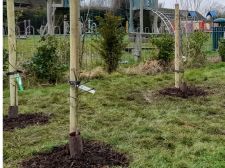
The Seaford Community Orchard features a wide range of fruit trees in different forms, giving you ideas for your own space or garden—and, in a few years, a chance to taste the results! To visit, join a workshop, come along to one of our volunteering sessions or get in touch.
Before you start, we’ve put together a few key questions. Working through these will help guide your choice.
Qu 1) What type of fruit do you want to grow and eat?
Although apples are the most popular fruit tree, many other types of fruit trees can be successfully grown in the UK. The most common ones are:
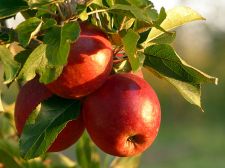
Pome Fruits
The most commonly grown fruits, ie apples and pears. Pomes also include quince trees. They are pruned in a similar way, in winter and summer.
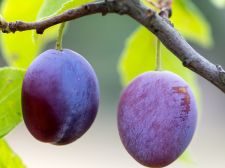
Stone Fruits
Another group of popular fruits – this includes plums, greengages, damsons and cherries. They should always be pruned in summer to avoid infection.
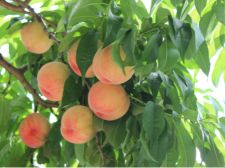
Tender Fruits
These include apricot, peaches and nectarines. With milder winters due to climate change, these are getting easier to grow. Tender fruits should be summer pruned.
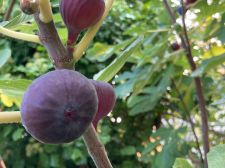
Figs
Surprisingly easy to grow – and to get fruit from. Fig trees have a long history in Sussex. Fig trees should be pruned in spring.
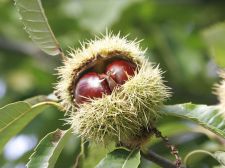
Cobnuts, Hazelnuts and Sweet Chestnuts
Cobnuts and hazelnuts are easy to grow – although squirrels might get your harvest before you do! All of these trees can be pruned or coppiced in winter.
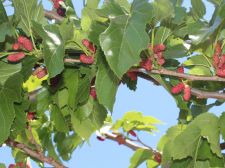
Medlar, Mulberry and Walnut
These are more unusual types of fruit trees – they are often found in historical orchards. All have specific pruning needs.

Qu 2) How will you use the fruit?
Before choosing a tree, consider how the fruit will be used and who’ll be picking and using it. Some varieties are best eaten fresh, while others are more suitable for cooking or preserving. If the fruit is mainly for children, you might want something sweeter. Does the fruit need to store well, or will it be eaten soon after harvesting. Being clear about how the fruit will be used can help narrow down your options and guide your choice.
Qu 3) What are your growing conditions?
Think about where the tree or trees will be planted. Is it sunny or shaded? Sheltered or exposed to wind? Does the soil drain well, or does it stay wet after rain? What sort of soil have you got – ie is it chalk, clay, sand or loam? How windy is it? Different types of fruit trees need different conditions. Your site conditions will also affect which rootstock you choose.
If you’re not sure how to assess your site, we’ll be running a workshop and uploading a guide about this during late winter/early spring 2025/6.
Qu 4) How much time have you got for care, pruning and watering?
How much time and attention can you give your tree or trees? Some need regular pruning and care, while others are more low-maintenance. If you’re planting in a shared or public space, will someone be able to water young trees during dry spells? (In general, trees need watering once a week during dry spells in spring and summer for the first couple of years). Who will look after the trees long-term?
Qu 5) How much space have you got?
Fruit trees come in a variety of sizes and forms, from compact types suited to pots or small spaces, to full-sized trees. Many can be trained to grow along fences or walls. Their size is largely determined by the rootstock they’re grafted onto and the form you prune it into (see more below). Don’t be put off growing fruit trees if you’ve only got a small space or even just a pot.
Qu 6) Is fruiting period important?
If the tree is in a school, avoid varieties that ripen during the summer holidays, when no one is there to harvest.
Qu 7) Is it important when you’ll get your first harvest?
Different fruit trees take different lengths of time before they start producing fruit. Some varieties begin cropping within 2–3 years, while others may take longer. Knowing when you can expect your first harvest sets realistic expectations – particularly important when working with children!
Qu 8) Landowner requirements:
If you’re on a public site, the local authority or landowner may have additional requirements. These might include: management of any fruit fall, minimising risk of wasps near walkways, space for machinery or grass cutting equipment.
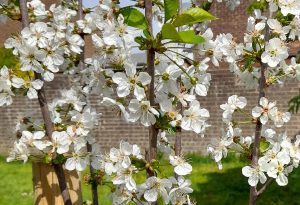
Qu 9) Is heritage value important?
Commercial orchards tend to concentrate on very few varieties because of the demands of supermarkets. This means we are reliant on a very limited number of varieties of fruit. Heritage collections form a valuable genetic bank, and heritage varieties can have a strong local link and can be more suited to local conditions. On the other hand, they can sometimes be more difficult to source, and some may have lower disease resistance than more modern cultivars.
Now let’s take a closer look at some key concepts: rootstocks, cultivars, pollinations groups and fruit tree forms.
Understanding Rootstocks
How and why rootstocks are are used in fruit trees is one of the most important considerations in choosing fruit trees. Learn more here.
Understanding Cultivars
What are cultivars and how do we choose the right ones? Learn more here.
Understanding Pollination Groups
Ensure your tree fruits well by discovering a bit about pollination and pollination groups. Find out more here.
Understanding Fruit Tree Forms
Understanding fruit tree forms will help you buy your trees, and prune them correctly to fit almost any space. Find out more here.

Purchasing fruit trees
You can buy fruit trees from supermarkets through to specialist nurseries, but it’s worth buying from a trusted source to ensure the trees are disease free and will grow and fruit well. If you’re looking for funding, the funder might require that the trees come from a registered nursery, to make sure you check this carefully before you buy.
Fruit trees are available bare rooted or container grown, and there are advantages and disadvantages of both. We’ll have more information about this on our Planting Fruit Trees page coming soon.
Some nurseries to consider are:
- Frank P Matthews is a well established fruit tree nursery, stocking a wide range of fruit trees and delivering nationally.
- Grow Fruit Trees is a family nursery in Kent, and works in partnership with the National Tree Collection in Brogdale. They grow a wide range of heritage varieties.