Understanding fruit tree forms
Why are fruit trees pruned into different forms?
In theory, you could just leave a fruit tree alone, and you’d still get some sort of harvest. However, fruit trees are generally pruned to improve productivity, and keep the tree healthy and the desired shape and size. Fruit trees can be trained and shaped into a variety of forms, each suited to different spaces, uses, and levels of gardening experience. Some forms, like the bush, are straightforward to manage. Others, such as cordons, espaliers, or fans, require more regular pruning and training to maintain their shape and productivity. Some rootstocks are more suitable than others for particular forms, so it’s worth deciding before you plant how you want to train your tree or trees.
Some common fruit tree forms are shown below:
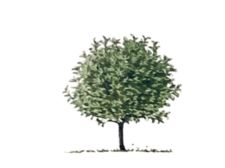
Bush
Probably the most practical shape for gardens and orchards. Not too large – easy to pick the fruit and carry out pruning.
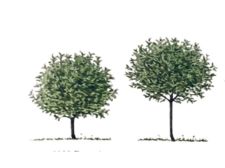
Semi-Standard and Standard
These are larger forms, and both need ladders to pick the fruit and prune the trees.
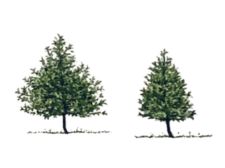
Spindle Bush and Dwarf Pyramid
Branches are spaced for maximum light. Smaller spindle forms and dwarf pyramids can be pruned and picked from the ground, and are good forms for gardens and orchards.
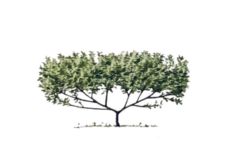
Fan
A good shape for walls and fences. Fans can also be very productive.
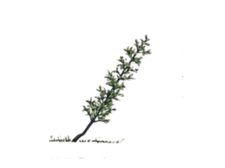
Cordon
Requires very little space and can be very productive.
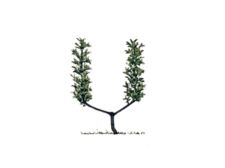
Double and Multiple Cordon
Similar to the cordon, but upright, with two or more main stems.
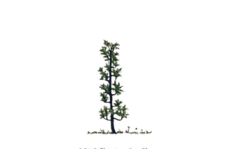
Pole
Similar to a cordon, but upright and can be taller. Very useful where space is limited, and some can be grown in containers.
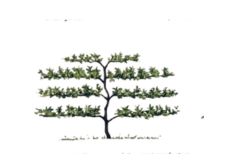
Espalier
One of the most productive shapes, and can be grown against a wall. But requires experience to prune.
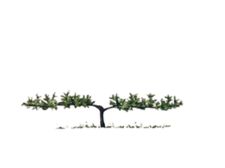
Stepover
A low growing form that can be – literally – stepped over! If growing in a public space where dogs are allowed slightly higher versions might be needed.
All images from