Growing in Raised Beds
In this guide, Dan Ori MCIHort shares his extensive experience and research on planning, building and growing in raised beds in community settings. Dan is a certified instructor for the Square Foot Gardening Foundation, pioneers in raised bed growing. The content for this page was delivered via projects at Tower House School and Annecy School in partnership with Seaford Action For Nature, Trees for Seaford, Wood Creatives and supported by Ouse Valley Climate Action Fund.

Before you start – is a Raised Bed Right for Your Project?
Raised beds are an excellent solution for many projects, but they’re not always the best fit for every space or situation. So it’s worth weighing the pros and cons.
Benefits of Raised Beds
- Easier access for people with mobility issues
- Warm up more quickly in spring, extending the growing season
- Good for hard surfaces or areas with poor soil
- Can be filled with specific compost mixes, to reduce water needs (visit our page on Dan’s special mix) or for specific needs, like acid-loving plants
Possible Drawbacks
- Initial cost of materials and compost or growing media
- They need maintenance
- They may need refilling every few years, although this can be reduced by using Dan’s special mix.
- Not always suitable for permanent or deep-rooted plants like trees or shrubs
Planning Your Raised Beds
Good planning saves time, effort, and money. Here are a few things to consider before you build:
Ground level or Elevated?
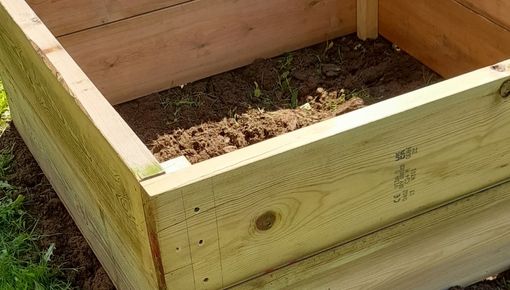
Ground-level beds are:
- Easier and cheaper to build
- Longer-lasting
- Suitable for most situations
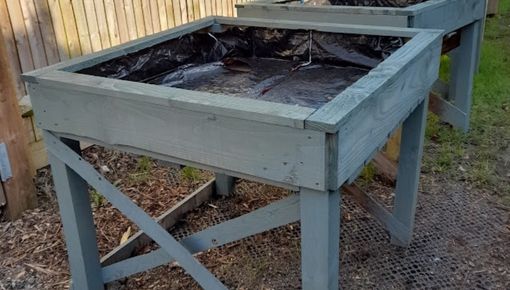
Elevated beds (on legs) are:
- Great for wheelchair users or those who can’t bend easily
- Useful for displaying special plants
- More complex and costly to construct
- Shorter lifespan due to structural demands
Choosing a Location
Think carefully before placing your beds—moving them later can be tricky! Key things to consider:
- Sunlight – Most vegetables need at least 6 hours of direct sunlight, but some vegetables, such as perennial spinach, as well as fruit bushes, require less.
- Access – Leave space around the beds (at least 60 cm) for comfortable movement. For wheelchair access allow 90cm space and 120cm for turning.
- Water access – consider how you will keep them watered
Dimensions
Ground-level beds:
Width: 1 to 1.2 metres allows most people to reach the centre comfortably. For children or those with limited mobility, keep the width to 1 metre or less.
Length: This can be flexible to suit your space, but avoid making beds so long that they’re hard to walk around or reach across.
Depth: A depth of 30 cm is sufficient for most crops, but root vegetables like carrots and potatoes need at least 45 cm. Deeper beds, around 60 to 75 cm, are easier to access for people with mobility issues and retain more moisture while regulating temperature. However, they are more expensive to build and require more filling material.
Elevated beds: For elevated beds, the weight of the compost mix and plants means your maximum size should be 1 x 1 m x 30cm
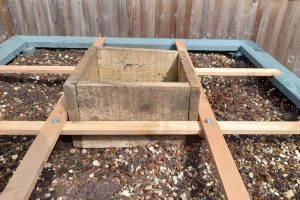
You can also make a ‘top hat’ to fit over your raised bed to increase the soil depth in a small area and grow a few root vegetables. (Photo from the Peverells Community Garden)
How to build a raised bed
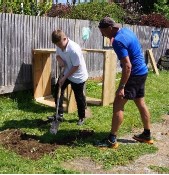
Preparing the ground:
For ground level beds, proper preparation of the ground is essential to prevent grass and weeds growing through. Start by stripping off the turf, which can be stacked up and left to compost. Make sure to check for and remove any persistent perennial weeds, like dandelions, as they can easily regrow. Line the base of the bed with a weed-suppressing membrane, cardboard (avoid printed or coloured) – or both.
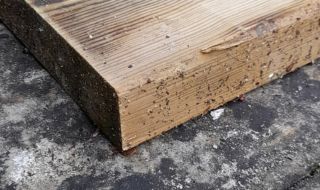
Choosing Timber:
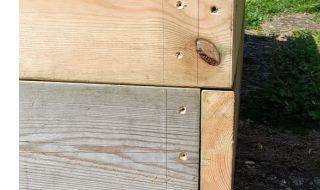
For a durable and safe raised bed, Dan recommends tanalised (pressure-treated) timber, such as C16 225mm x 50mm planks, which resist rot and insect damage. Modern tanalised wood is safe for food growing. Recycled wood, such as scaffolding boards or pallets, can be used, but ensure it hasn’t been treated with harmful chemicals if you’re growing food crops.
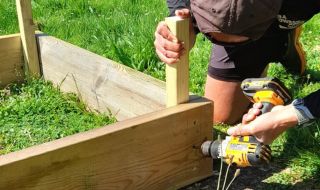
Materials and Equipment:
- Timber: Tanalised (pressure-treated) C16 wood
- Deck screws
- Landscaping fabric, cardboard or both to line the base
- Drill, drill bits and saw
- Scissors and staple gun (optional)
- Work gloves, eye protection and ear protection

Filling Your Raised Bed:
Option 1: Dan’s Special Mix (recommended)
Option 2:
- Peat-free compost or home-made compost
- Well-rotted manure (avoid this if you’re growing root crops – manure can cause ‘forking’
Maintaining Your Raised Bed
If you’re using Dan’s mix, you’ll just need to top up with some fertilizer annually. Otherwise, you’ll need to top up the compost each year to maintain fertility and structure and replace the compost every few years. Check the wood for rot – replace or repair as needed. Rotate crops to prevent nutrient depletion and disease build-up.
Raised beds top tips:
A mix of both ground level and elevated raised beds work well in community spaces. At the Peverells Community Garden, we started with ground-level beds and later added elevated ones when we had a bit more time and funding.
If you’re not sure whether your wood has been treated with chemicals, or you’re using reclaimed wood, line the beds with old compost bags or weed-suppressing membrane, to prevent any chemicals leaching into your vegetables.
Avoid filling raised beds with topsoil—it’s heavy and can compact easily. It is also usually full of weed seeds.
Spacing your raised beds for wheelchairs (90cm paths and 120cm turning areas) means you’ll also have enough space for wheelbarrows!
We ordered our wood from a local sawmill, who cut it to size for us and delivered for a small additional charge.
More information:
For in-depth information about raised beds and square foot gardening visit The Square Foot Gardening Foundation. (Although you’ll have to sign up for their course or buy the book to get details).
You’ll find lots of free information and step-by-step guides about how to build raised beds on YouTube and the internet.