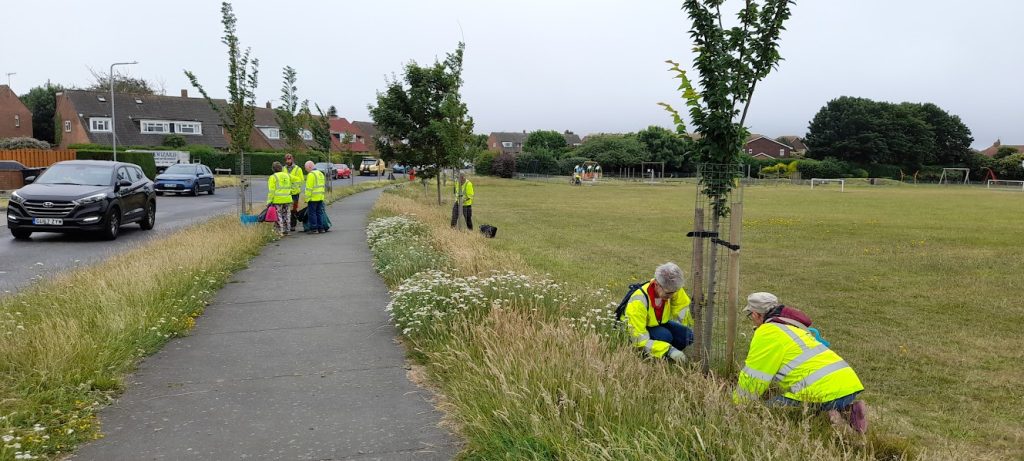
How to Plant and Care for Trees in Public Spaces
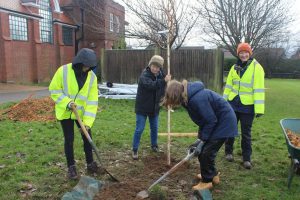
This guide is about planting trees in public spaces and brings together local experience, combined with advice from experts. Although the information relates to East Sussex, a lot of it applies to the UK as a whole. If you’re thinking of planting a tree in your garden, we hope you’ll also find it useful!
We’ve put together some key questions and considerations to plan a successful tree planting project.

If you’re a tree planting group in East or West Sussex we’d love to hear from you! Sheffield Park and Garden is planning a new initiative to bring together and connect community tree planting groups across Sussex. They’ll provide a space to learn, guidance and somewhere to talk (ideally over a coffee and slice of cake!) To find out more, including details of the first forum early in 2026, please get in touch.
Get ready
Why plant trees?
There are many good reasons to plant trees: they store carbon, support biodiversity, improve air quality, promote health and wellbeing, and help regulate temperatures by providing shade and shelter. Being able to explain these benefits clearly helps when speaking with landowners and the local community. We’ve included links at the end of this page with more detail on the benefits of trees, which we hope you’ll find useful.
It’s also worth remembering that not all planting projects succeed. Nationally, only about 40% of planted trees survive, often due to poor aftercare, unsuitable species choices, poor planting techniques or limited local support. In some cases, planting trees may even harm existing habitats. Careful planning before you plant will help ensure your trees live for decades – if not centuries – to come.
Who needs to be involved?
They say it takes a village to raise a child – and the same goes for planting a tree! If you want to plant in a public space, it’s best to do so as part of a group. This could be a community organisation, school, residents’ association or a tree planting group. Working in a group means planning, planting and aftercare can be shared, and different skills and knowledge brought together. You can also link up with the Tree Wardens Network.
Groups are also better placed to handle the practical side of planting. Public planting usually requires insurance, and you may also need funding, tools or materials. These are much easier to organise collectively. You can find lots of help and information in our Setting Up And Running A Community Group module.
Support from the local community, especially people who use the space, is essential. Leafletting residents or putting up posters helps build support but talking to people face-to-face is often most effective. Consulting local residents at the outset not only encourages them to help with planting and upkeep, but also builds goodwill and support for the project and reduces the risk of objections or misunderstandings.
Councils and landowners also need to be involved from the outset. This may include council officers responsible for parks, highways or planning, and local councillors. Early involvement and close collaboration is key – processes can take a while and can be difficult to navigate – so leave plenty of time!
Finally consider whether you can involve any other local groups or clubs who use or have a connection to the space.
Right tree - right place
Planting a tree is a long-term commitment. With the right planning, your tree could live for decades or even centuries. Always consider your location first, then decide what species would grow well there. Before you plant, think carefully about factors such as:
-
Local residents – Residents may prefer trees that flower, provide fruit, screen an eyesore, or avoid blocking a view. They may also worry about light or potential damage to property. A friendly conversation can often address these concerns.
- Watering and aftercare – poor aftercare and failure to think about the long term is one of the biggest reasons tree planting projects fail, so it’s important to plan ahead. Who will be responsible for watering the trees? Is there a nearby water source? Make sure it doesn’t all rest with a single individual.
-
Climate and soil – What species will thrive in your chosen location? Look at which species are already doing well nearby.
-
Diversity – Avoid relying on just one or two species, as this makes trees more vulnerable to pests and diseases (such as Dutch elm disease or ash dieback). A diverse mix of species is best practice.
-
Availability – Check which species are actually available to buy.
-
Special uses – Are the trees being planted for a particular purpose? If you’re interested in fruit trees, our module on Fruit Trees and Community Orchards is packed with support and resources.
Getting permission from the landowner
Before planting a tree, you need permission from the landowner. In East Sussex, land next to roads and pavements (known as the highway) is owned and managed by East Sussex County Council (ESCC). All tree planting on highway land must follow ESCC’s tree planting policy. It’s worth noting that planting on highways is the most complex option, due to legal requirements for working on roads. So if you’re just starting out, we’d suggest finding a location that isn’t on a highway to begin with if possible.
For other types of public land — such as greens or open spaces — ownership may rest with your district, town or parish council. In some cases, identifying the landowner might require a bit of investigation. Asking your local council is usually the best first step.
Working closely with landowners and councils from the start, and fostering good, constructive relationships is key to getting permission and long term success. Getting permission can take a while – so early involvement is key!
Planting in school grounds and church grounds can also be very successful and a lovely way to get the community involved. If you’re working with schools just make sure someone can water the trees over the holidays.
Get set
How and where to get advice
You may already have knowledgeable people in your group, but if not, don’t let this put you off!
If you’re part of a tree planting group in Sussex, please feel free to contact us – we may be able to connect you with expert advice, and you can also link in with the new community tree planting initiative led by Sheffield Park.
Tree nursery staff are often very knowledgeable and can guide you in choosing the right tree and we’ve listed recommended resources at the end of this page.
How to assess your site
Having found your site, an important process is to assess it for suitability and decide what species of tree or trees would work best. This is a complex process and there are lots of factors to consider. If you’re planting on public land, the landowner will have requirements you must meet. These might include the location of overground and underground services, sight lines, safety, and access.
Get a range of viewpoints, and expert advice if you can. The Growing Community Toolkit is running a workshop on site assessment in late 2025/early 2026. Please get in touch or join the mailing list to find out more. In the meantime some factors to consider are:
- Soil quality, wind exposure, climate, and the amount of vertical and horizontal space will affect which species will grow best. Availability of water should also be considered, as well as the likelihood of vandalism or other risks to young trees.
- Consider nearby residents and other users of the space – how might the trees impact them, and how can their support be gained? Early consultation helps build goodwill and ensures long-term care.
- Biodiversity is another key consideration. Trees can complement and enhance existing wildlife, providing food and shelter for birds, insects, and other species. But sometimes trees may conflict with existing habitats – for example, planting in a sunny wildflower area could negatively impact the nearby environment.
How and where to get funding
Investing in good-quality trees from a reputable supplier is important to ensure they are healthy and disease-free. Some funding schemes or landowners may also require you to source trees from approved suppliers.
For practical guidance, see our Fundraising module. Many tree planting groups receive grants from their local councils, so it’s worth asking. The Tree Council also offers grants for tree planting projects.
Remember that funding is needed not only for the trees themselves, but also for supplies such as stakes, ties, guards and possibly tools. Trees need care for at least three years, which may include replacing stakes and ties, so try to include this in your budget.
What else do I need? (Tools, supplies, training, insurance etc)
For a successful planting day, you’ll need the right tools, equipment, and safety measures.
A sample tool and equipment list could include:
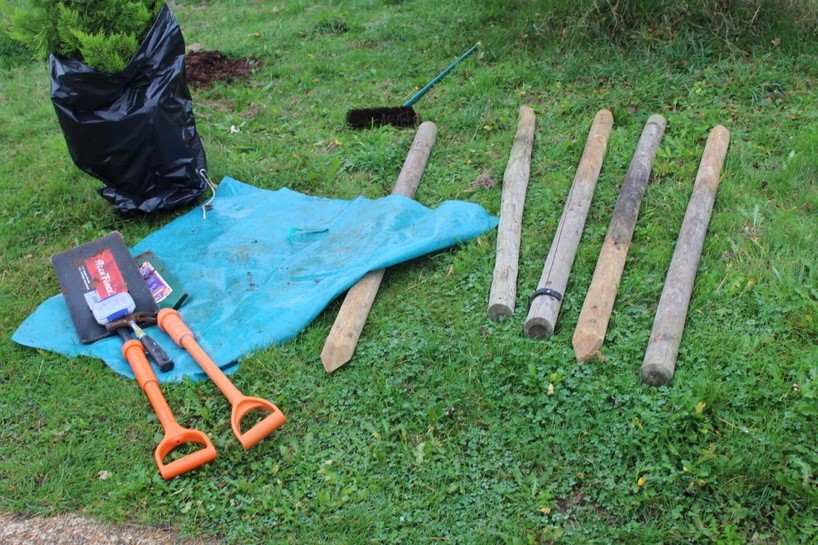
- Garden spades and forks (unless you’re on a highway, in which case specialist spades are required and a CAT scanner); club mallet and stake driver; hammer and nails; secateurs and loppers
- Tarpaulins to collect soil; a wheelbarrow or two
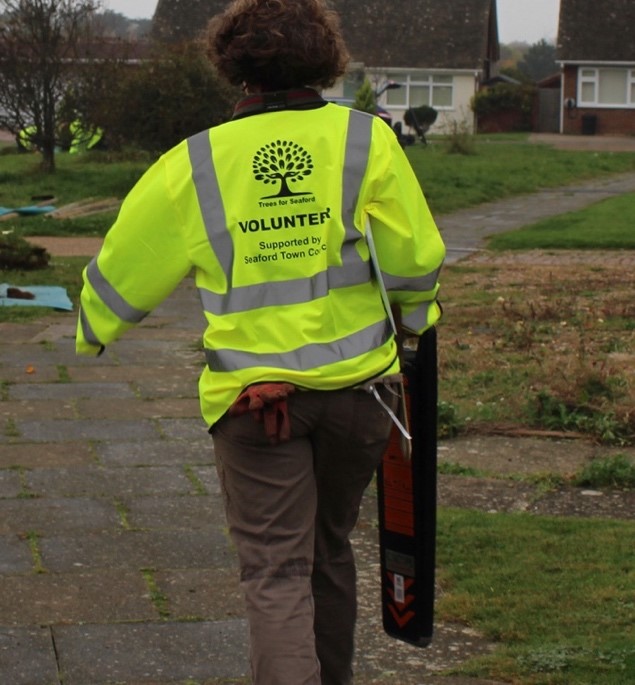
- Hi viz jackets and gloves for volunteers
- Stakes, ties, tree guards and woodchip
Remind volunteers to wear sturdy boots and bring gardening gloves if they have them.
Gardening In Action is building a Tool Lending Library – so we may be able to help!
You’ll also need a risk assessment, insurance, a first aider and first aid kit. If you’re working on highways, more extensive training and qualifications are required.
Don’t forget refreshments! Local residents or organisations are often very generous in offering hot drinks and sweet treats to hard working tree planters!
Where and how to buy trees
Take time to choose the right kind of tree — not just the species, but also how it’s grown and supplied. There are three main types you’re likely to come across:
- Bare root: Lifted from the ground when dormant (usually November to March). Lightweight, affordable, and easy to plant, but must be handled carefully and planted quickly.
- Rootballed: Trees grown in the ground and lifted with the roots still in soil, held together in hessian. Often used for larger trees. More expensive and heavier to transport.
- Container-grown: Supplied in pots, and available year-round. Useful outside the dormant season, but can be more prone to root issues and more expensive.
There are many good and reputable tree nurseries. You might also have a local nursery. Things to look for are:
- Does the nursery grow the trees themselves or buy from other nurseries or from abroad? If you can, it’s best to buy direct from the grower, and avoid buying trees that have been imported.
- Do they have any accreditation, such as Plant Healthy Certification and / or adherence to British Standard 8545?
- What’s their policy if the tree fails? Will they replace it?
Buying from a reputable grower ensures that the trees are healthy and disease free and the species is appropriate for the space. Avoid the temptation to take up offers of free trees, or trees grown in pots by members of the community as they might not be suitable for the space, might have diseases or might have poor root growth or other problems.
Go!
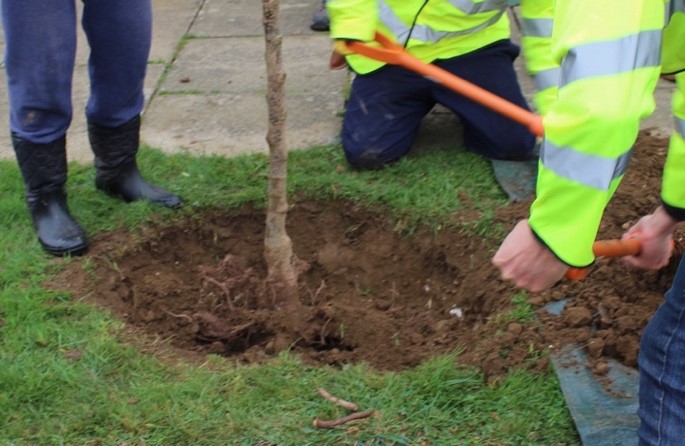
Planning your planting day
Organising Your Planting Day
It can take a year or more of planning before you actually get to plant your tree! So it’s worth getting organised to make sure your planting day goes as smoothly as possible.
Here are some key things to think about when organising your planting day:
- Tree planting locations: visit your site a week or so before planting and mark locations using line marker spray or something similar. (The spray doesn’t last long on grass, so mark the pavement, or a nearby fence or structure.)
- Trees, tools, equipment and supplies: How will you get your trees delivered and stored before the planting day? You might need to hire or borrow a truck, van or trailer. Local tree surgeons can often be very helpful and it’s worth asking for their support. Think about what tools and supplies you’ll need, whether you need to buy anything, and how you’ll get everything (including the trees!) to the site on the day.
- Pre-planting session: It’s useful to have the trees delivered a few days prior to planting, then there’s time to check them, label them with their planting locations, and do any formative pruning before they go in the ground.
- Community involvement: If you can, involve the local community — residents, councillors, schools, local groups etc. People don’t need to have experience or physical strength, as there are lots of different jobs to do. It’s worth involving people even if they just want to come along for a chat and a look.
- Snacks and hot drinks: A good planting day runs on biscuits, cake, and hot drinks.
- Have a backup date: Have a backup date in case the weather is too bad to plant safely or something else goes wrong.
- Expect something to go wrong! However well you’ve planned, something unexpected will happen! Flexibility, teamwork and humour will mean the trees get planted.
How to plant
When it comes to planting trees in public spaces, the physical planting of the tree is probably the easiest part! However, the science of tree planting has moved on, and it’s worth researchingthe latest best practice – we’ve included recommended resources at the end of the page.
Aftercare
Aftercare is the most important part of tree planting – many trees fail because they’re planted and then forgotten. Some key things to consider are:
- Watering – make sure someone (or ideally a group of people) are responsible for watering the tree in dry weather.
- Trees need regular checks – including pruning, adjusting stakes and ties, and refreshing the woodchip. Organising regular ‘TLC’ sessions is a good way to get people together and make sure the trees are looked after.
- Under normal circumstances, stakes can be removed after 2 growing seasons.
- Have a long term plan – who will take over the maintenance of the trees once they’re bigger and can’t be looked after by volunteers. (For example, in East Sussex, there is an agreement that trees become the responsibility of the Council after 7 years).
We’ve included recommended resources for more information at the end of the page.
Further reading and resources
Books and websites
We’d recommend the following resources:
Books:
-
The Tree Book: Superior Selections for Landscapes, Streetscapes, and Gardens – Michael A. Dirr and Keith S. Warren (US-focused but still relevant to the UK).
-
The Essential Tree Selection Guide: For Climate Resilience, Carbon Storage, Species Diversity and Other Ecosystem Benefits – Henrik Sjöman and Arit Anderson.
Websites:
The Arboricultural Association: although aimed at professionals, there is lots of very good information for community groups, including their comprehensive and accessible Young Tree Establishment Guide.
The Tree Council: the national association for community and volunteer tree planting. Their Tree Planting Guide has a lot of useful information, with other resources available via the website.
Barcham’s Tree Nursery: although a commercial organisation, Barcham’s have a lot of useful information on their website about planting trees. Their tree species database is useful and comprehensive. They also produce a number of technical guides available free to download:
Contacts
-
East Sussex: If you’re part of a community group — or thinking of starting one — you can contact the Highways Team directly to find out how to get permission for tree planting and processes. (Contact information coming soon)
-
East & West Sussex: To learn more about the new community tree planting and care network led by Sheffield Park, please get in touch and we’ll pass on your details.
-
Trees for Seaford: have been planting trees for over 15 years and recently reached their 1,000th tree, mostly street trees. Their practical experiences have helped to inform this guide. If you’re a community group in Sussex and like to visit or have a chat about trees please get in touch and we’ll pass on your details.