Understanding Soil
Dan Ori MCIHort explains how understanding soil can help you grow strong and healthy plants in community spaces or gardens. This content was presented as part of a workshop at Seaford Community Garden, supported by the Ouse Valley Climate Action Fund.
Jump to
Understanding soil and soil layers
Soil types
Soil pH and how to use a pH metre
More information
Links
Ask a question or join the mailing list
Understanding Soil
We often use the terms ‘soil’ and ‘compost’ interchangeably. By soil, we mean the earth beneath our feet. Compost refers to organic matter added to soil to improve its fertility and structure.
Understanding soil structure and pH helps us improve our soil and grow healthier plants. However, if you don’t have time for the science, the good news is that there’s a simple answer to improving all soil types, which is to add organic matter! If you want to know more – please read on. We’ve also added some links for more information at the end.
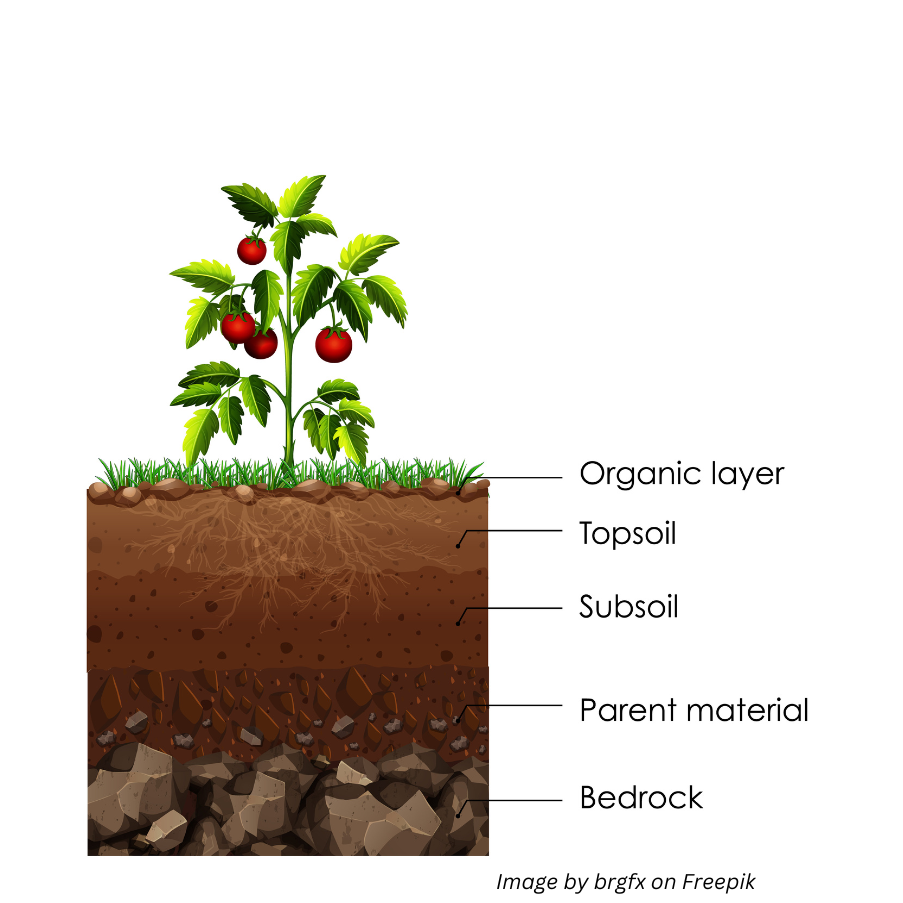
Soil Layers
- Topsoil: The uppermost layer, rich in organic matter and nutrients, where most plant roots grow.
- Subsoil: The layer below the topsoil – denser and less fertile.
Soil Types
The most common soil types in Lewes District are:

Clay Soils
Composed of fine particles, these soils are very fertile but can become heavy and waterlogged. Clay soils can be acid, alkaline or neutral. (See next section about soil pH.)

Chalky Soils
These soils are often shallow and have a low fertility. They are usually alkaline and stony, and free draining.

Sandy Soils
Consist of larger particles, leading to quick drainage but lower fertility. Sandy soils are usually acidic.
Soil pH:
This means how acid or alkaline your soil is. Soil pH affects the type of plants which will grow well – different plants have evolved to draw nutrients from different soil acidities.
An easy way to discover the type of soil in your area is to find some hydrangeas: pink means alkaline soil, blue means acid soil. (But be careful – some gardeners manipulate the colour of their hydrangeas with additives!).
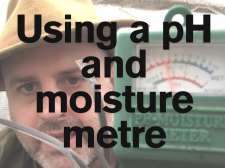
Another way to find out your soil acidity is to use a simple pH metre. These usually measure soil moisture as well. Watch Dan demonstrating an easy-to-use moisture and pH metre.
It’s best to choose plants suited to your soil type. If you want plants that prefer different conditions, growing in containers with specialized compost can help. For example, blueberries and rhododendrons thrive in acidic soil, but since Seaford and most of Lewes District have neutral or alkaline soil, they grow better in pots.
Many vegetables prefer slightly acidic soil, so in Lewes District, raised beds with compost may improve results. However, brassicas (e.g., cabbage, broccoli) prefer alkaline soil. (This might mean you need to add garden lime if you want to grow brassicas in acid soil).
If you’d like to know more about soil, Dan recommends the following resources:
- Royal Horticultural Society (RHS) – understanding soil types
- Gardeners World – Find out your soil type